OVERVIEW
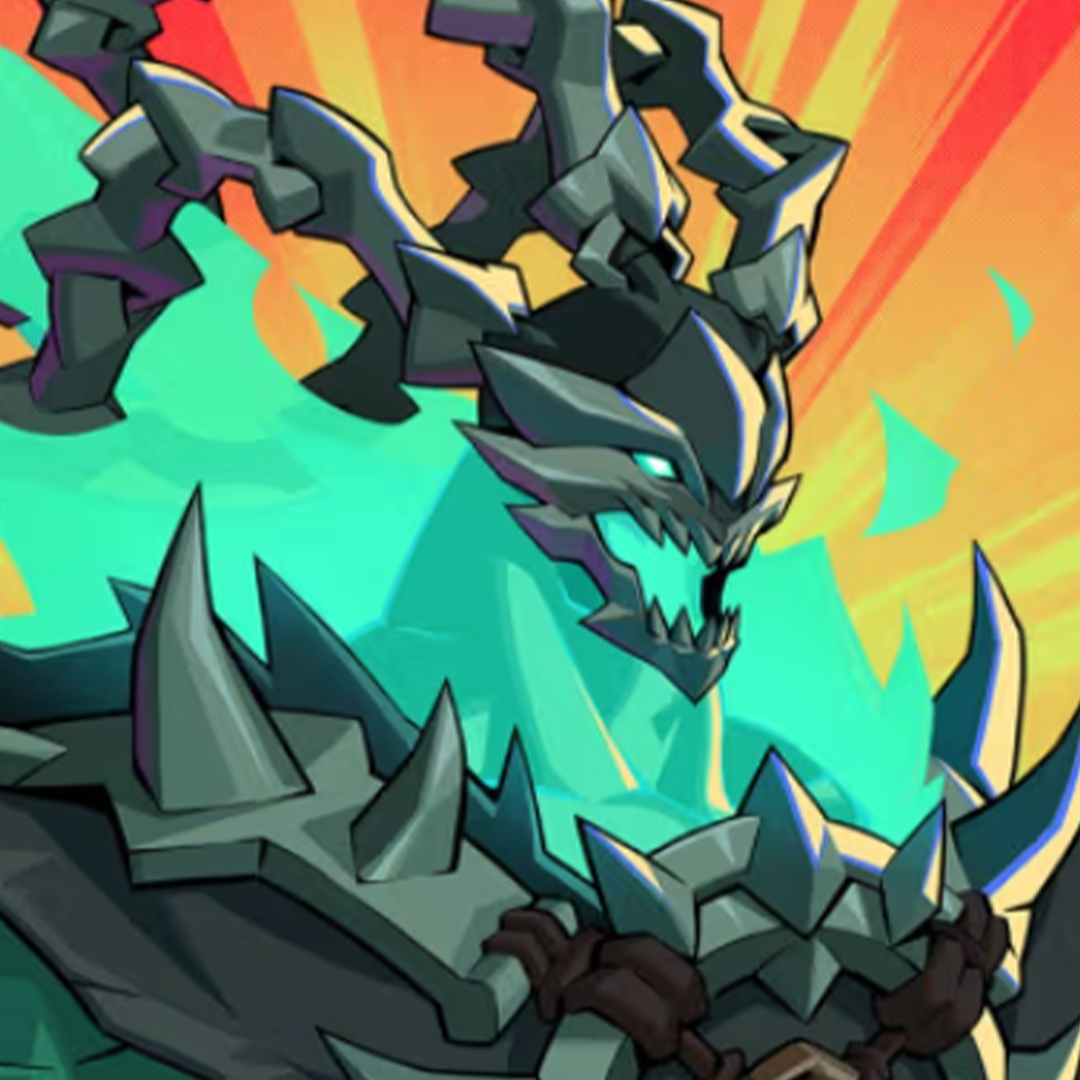
Thresh is the range character. Not a range character — the one that other zoners genuinely do not want to see, because he has the tools to punish mistakes from any part of the screen.
He is slower than average with clunky movement, and his normals and specials are so long that he does not need to fix that. His whole game is sitting between close and long range, forcing passive players to act and standing as a stop sign in front of aggressive ones. Do not rush for damage. Control the pace and make them come to you.
Tip
The most common Thresh mistake is playing him up close. He does not need to be in your face at any point — his mid-range is where every one of his best buttons lives.
THE LANTERN & HOOK
The lantern (S2) is the most feature-dense move in the game. Throwing it counts as a hit, and you can hold forward or back while pressing S2 to control where it spawns. While it is out:
- Press S2 again to teleport Thresh to it
- Hold tag to teleport your teammate to it instead
- You can cancel into either option from a normal attack — but not from a special
- You can even reverse it: leave the lantern out with Thresh off screen and tag him in through it
It is also very plus on block — in the region of +20 to +24 — and a strong combo starter in its own right. The catch is placement: a bad angle simply whiffs, so it rewards deliberate use rather than throwing it out.
Tip
End combos on limit strike, especially in the corner. That gives you time to place the lantern before they get up, and lantern oki is arguably his best mixup in the game.
The hook (S1) is his other pillar — slower than his standing heavy but with better range, functioning as a full-screen check. It hits at a fixed angle, so your combo routes stay consistent wherever it lands.
Both S1 and down S1 can be charged, and the charged versions pull Thresh toward the opponent on hit or block, leaving him very plus with a special jump-in. You can also cancel any S1 out of its charge into a dash, which dodges punish attempts and, because the dash side-switches, threatens a mixup at the same time.
NEUTRAL GAME
His buttons do the work here, and each one has a job:
- Standing heavy — his best grounded normal. Checks everyone, applies pressure from most ranges, and converts into hook for huge damage
- Down medium — the button for controlling the sky against mobile characters
- Jump heavy — covers enormous air space and converts fully. Because his movement is slow, air-to-air jump heavy is often how he actually advances
- Jump forward heavy — catches airborne opponents and ground bounces for extra damage
- Forward heavy knocks them away and must be blocked low; back heavy pulls them toward you and can be blocked mid or high. Together they are his answer to runaway play
- Down-forward heavy — a long-range overhead. It has a dead zone, so it only works at certain distances
Down S2 (the ghoul) is his only forward-advancing projectile. It is slow and can be destroyed in two hits, so it loses projectile wars — but that is not its job. Use it as cover to walk behind, or place it, call an assist, and tag out so your incoming character inherits it. One nice detail: the moment they try to break it, it speeds up.
Anti-air with 2H. It is one of the biggest anti-airs in the game and stays reliable from tip range all the way to point blank. Down S1 also checks the air from much further out, but the reward is lower, so make 2H the default.
CORE COMBOS
Button Legend
His throws are the hidden strength. Thresh gets a full combo off almost every throw he has — roughly half a health bar from a plain midscreen throw, and more in the corner where the lantern provides a free bounce so you do not even need an assist. Air throws convert too. If you take nothing else from this guide, start throwing people.
Standing heavy into hook is the route to drill first because it works from most of the screen and leads into your biggest damage. Forward heavy is the low equivalent — at round-start range it gives a full combo, which makes it excellent for catching opponents who are watching for the overhead.
The advice from higher-level players is worth repeating: pick a bread and butter you can land consistently. A shorter route you never drop is worth more than an optimal one you do.
ADVANCED TECH
His dash is a teleport, and his model disappears entirely. That means it is not just movement — it is a way to avoid attacks outright and punish them. Using it with intent rather than as a walk button is the single biggest step up in most people’s Thresh.
It also crosses up, so calling an assist and dashing through creates a sandwich the opponent has to guess against.
The charged hook mix. Land or get a block on a charged hook and Thresh does a special jump-in while very plus. Because he has an air dash, that turns into double overheads: jump medium, air dash, jump medium. You can also chain multiple jump lights, which are overhead as well. Used on wake-up timing, this is one of his cleanest ways to open somebody up.
The lantern tag mixup. Once the lantern is placed, teleporting yourself is the obvious option — but tagging your teammate through it is often stronger, especially if that partner has their own overhead mix. Opponents who have learned to watch for the Thresh teleport are rarely ready for someone else arriving instead.
One caveat worth planning around: lamp tagging forces your incoming teammate to be airborne. If your partner has poor air options, keep lamp tags for combos rather than neutral.
TEAM COMPOSITION
Thresh has enormous setup potential that he cannot fully use alone, so the partner matters more than usual.
His assists are excellent in both slots:
- Neutral assist — a multi-hit fireball, strong up close, with enough hit stun for a full combo. On block it leaves you plus, so you keep your turn or get a mixup, and it can be used to cross people up
- Back assist — full-screen range and an OTG. This is the one that makes him special: it extends combos in ways other characters simply cannot, unlocking routes for partners who would otherwise have run out. It also checks full-screen zoners while your point character is busy
For partners:
- Senna is widely considered his strongest pairing at the moment
- Vi or another high-mobility character adds the movement he lacks and raises his average midscreen damage — just remember the airborne lamp-tag caveat
- Caitlyn if you want to lean the other way into full-screen presence and runaway play
He is worth the investment. He is not simply another long-range character added to the roster, and the kit takes real time to flesh out — if he feels awkward at first, that is normal rather than a sign you have picked wrong.
VIDEO RESOURCES
No Thresh video breakdown on the channel yet — when one goes up it will be embedded right here. In the meantime: