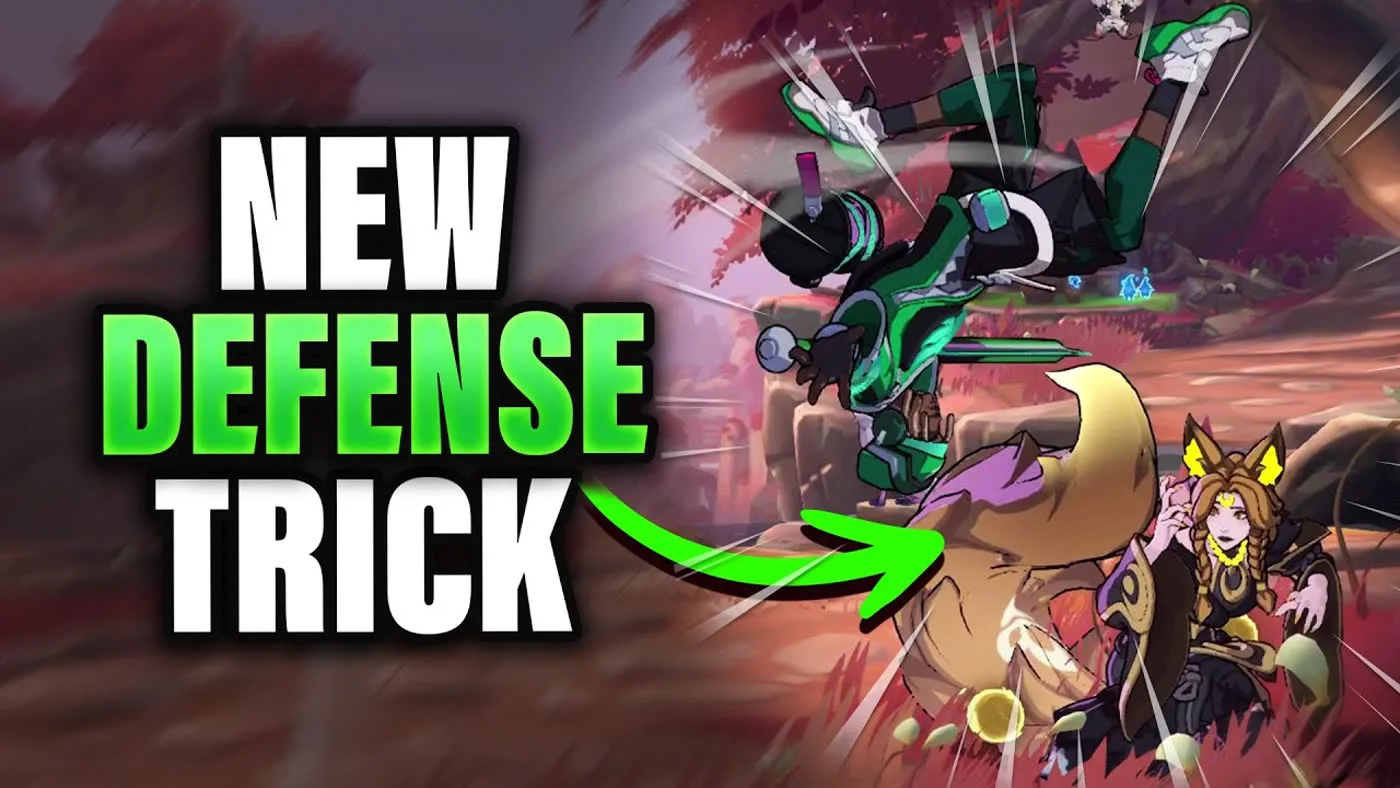
There’s a clip from winners quarterfinals where a pro eats a full Ekko mixup string — overhead, low, fake overhead, the whole blender — and blocks every single hit. Then he kills Ekko for it.
The commentators had already written him off. My brain had written him off. And here’s the part that matters: he wasn’t reacting. Nobody reacts to that. He was running a specific blocking technique called fuzzy guard, and once you see it you can’t unsee it.
The clip
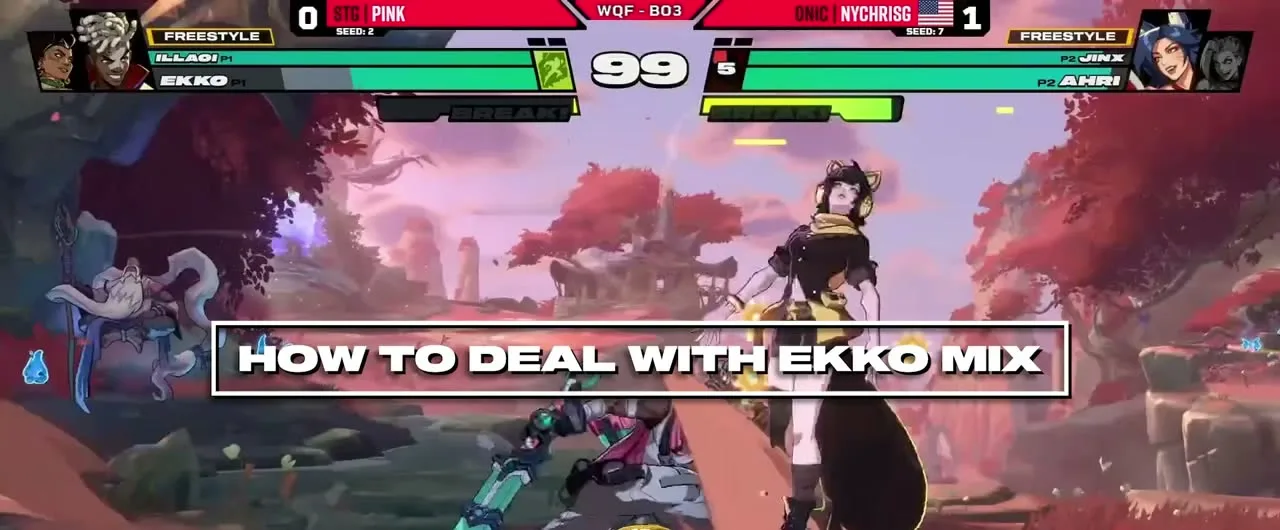
NYChrisG on Jinx/Ahri, against Pink on Illaoi/Ekko. Both running Freestyle — which, if you read my breakdown of why Freestyle took over the top of the ladder, will not surprise you.
First question worth asking: why was Chris G even in that situation? Because it was genuinely Pink’s turn. You can see the break meter was just spent, and Chris G’s Jinx assist is sitting on a five-second cooldown — meaning he’d just used her. Something happened, the combo ended, and Pink was trying to claw the turn back.
So Chris G jumps away. Ekko flies after him. And the string starts: light, medium, heavy into S2, with Illaoi called in to keep Ekko safe through the whole thing. The tentacle even connects.
It looks unsurvivable. It wasn’t, and the reason it wasn’t starts before the mixup even began — he jump blocked, which defused the scary opening and let him land in a stable defensive position instead of a scramble.
What fuzzy guard actually is
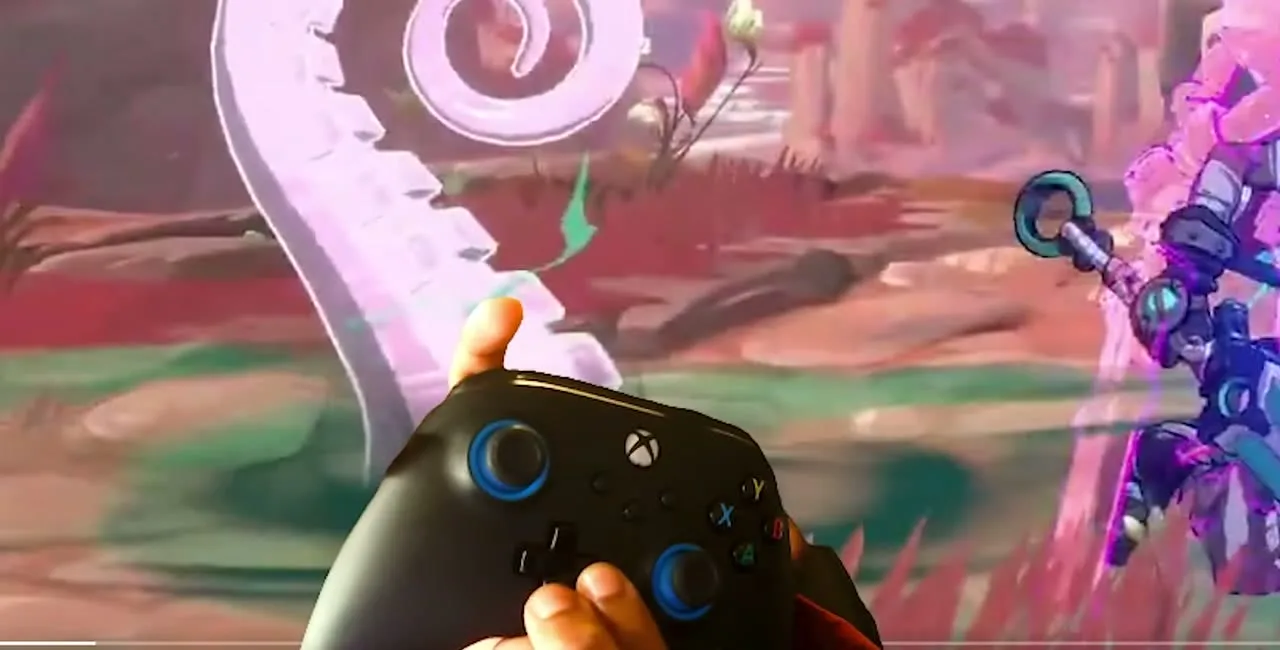
Fuzzy guard isn’t a move. It’s a way of holding your block so you can switch between high and low far faster than a normal input allows.
Holding back gives you the standing block. Blocking low needs down-back. Normally you press one, then travel to the other — and that travel time is exactly the window a mixup is designed to exploit.
With fuzzy guard you’re holding back with the crouch direction already loaded — almost pressing both at the same time — so switching costs you a fraction of the movement. When I do it the slow way, thumb travelling from back to down-back, it takes too long. Chris G is doing it at roughly half the speed.
That’s the whole mechanic. It’s not exotic. It’s a hand position.
Why it works: it’s logic, not reflexes
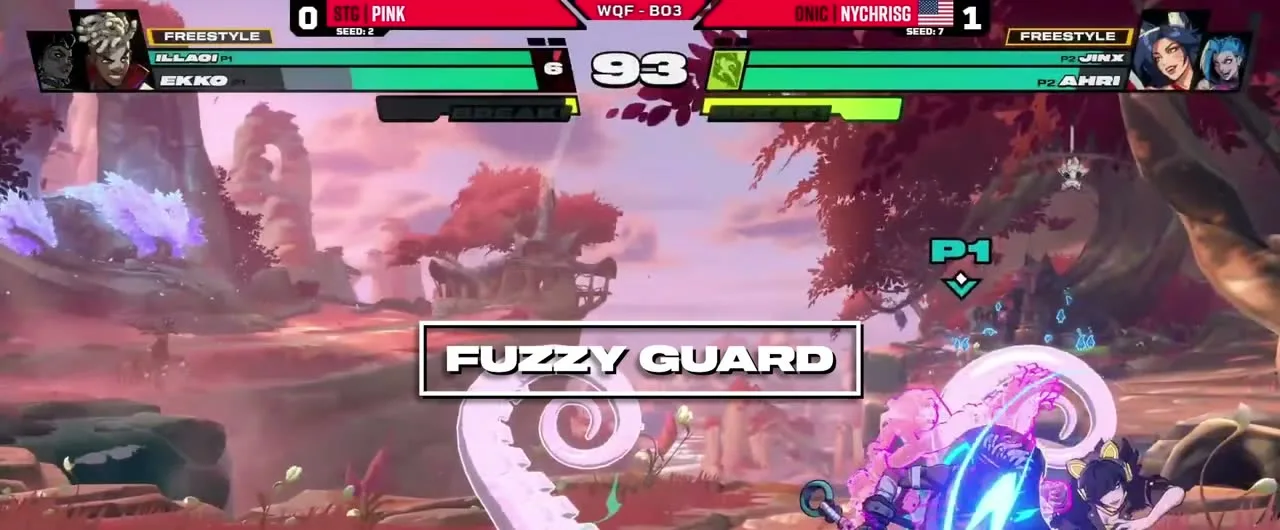
Here’s the part people miss. Chris G didn’t identify each attack and respond to it. He ran a pattern based on what Ekko had already told him.
Step 1: the jab window closes
Every Ekko goes into a jab here, usually a crouching one. There’s a specific window where that jab has to come out.
When the window passes with nothing in it, that’s information. Chris G knows it’s been a little too long — so it isn’t the jab, which means it’s the overhead. He blocks high, at the last possible second.
Step 2: after a high, everyone goes low
This is the rule that makes the whole thing work. Nobody follows an overhead with another overhead. It doesn’t make sense — you’ve just forced them to stand block, so the only move that beats them now is a low.
So the instant the overhead is blocked, you go low. And the beauty of it: if they surprise you and throw a standing punch instead, you still block it, because low blocking covers that too. You’re not gambling — you’re picking the option that’s correct against the likely thing and safe against the unlikely thing.
Step 3: the fake overhead
Pink went for the overhead again — and faked it.
Chris G was already mid-fuzzy-guard, going high, and dropped straight back to low. Blocked. That’s the sequence in its purest form: low, then high, then back to low, run as a rhythm rather than a series of decisions.
As trained as your combos are, your defense needs to be that trained too. That’s the actual takeaway. He didn’t out-read Pink so much as he had a better-drilled default.
The half nobody talks about: the resource war
Blocking was only half of it. What actually killed Ekko was Chris G draining him dry while surviving.
- He had no push block for the whole first sequence. Jinx was on cooldown. That’s why the early defense had to be pure blocking — the tool wasn’t available.
- The moment Jinx came back, he push blocked. That forced Ekko to burn Time Winder — the clone teleport — just to keep the pressure alive.
- He pushed again. Now Ekko is scared, and throws a projectile to maintain the block string, spending part of his clone super to do it.
- The assist ate the rest. Jinx got hit — it looked like a disaster, almost a happy birthday — but Chris G was still blocking, and that trade removed a big chunk of Ekko’s super.
Count what Ekko has left at that point: Illaoi gone on a five-second cooldown, super spent, clone spent. He looks like he’s still in control. He isn’t. That’s the exact moment the situation flipped, several seconds before anything visible happened.
Where Ekko lost it
Pink runs one more string — light, medium, heavy — and hits the Jinx. It still feels like her round.
What she needed to do was leave. Back dash after the heavy, or get out after the S2. There’s a safe exit off that heavy and taking it resets the situation with her resources intact.
Instead she charges the S2. And you can see exactly why: she’s out of options. No more overheads that’ll land, no low left, no assist, no meter to make anything safe. Charging is the only thing that gets her a clone and something resembling safety.
Chris G saw straight through it, parried, and took the full punish. Round over.
The lesson that applies to your games
You are probably not going to fuzzy guard a pro Ekko blender tomorrow. That’s fine — this is the part that transfers:
If you can survive the front end of the mixup, you win the back end by default. Burn through the cooldowns. Burn the meter. Burn their patience. Pressure characters are running a script, and the script has a finite length — when it runs out and they haven’t killed you, they have to invent something. That invented thing is almost always unsafe.
And this happens at pro level, in winners quarterfinals. Everyone acts up eventually. Your Gold-rank Ekko is going to act up a lot sooner than Pink did.
This is the same conclusion I reached coming at it from the other side in the Yasuo/Ekko coaching breakdown — outlast the pressure and the mistake comes to you. It’s true for Yasuo, for Ekko, and for anyone else built around a long threatening sequence.
Honest caveats
- Fuzzy guard is not a universal block. It buys you speed between high and low. It does nothing about throws, and it doesn’t help against a genuine left/right cross-up.
- The “after a high they go low” rule is a read, not a law. It’s correct against almost everyone almost always — which is exactly why a good player will eventually break the pattern on purpose.
- This clip is from the February meta. Balance and frame data have moved since. The technique is timeless; the specific Ekko string may not be.
- Chris G is a career fighting game pro. The hand speed on display took decades. The concept is available to you today; the execution is a long project.
- I’m reading Pink’s intent from the outside. She may have had a reason for that charge I can’t see from the replay.
What to lab
- Find your fuzzy guard hand position. Sit in training mode holding back, and work out how you’d reach down-back with the least travel. Pad, stick or hitbox — it’s different for everyone.
- Record an overhead-into-low string and loop it. Practise high, then low, as one motion instead of two decisions.
- Then record the fake — overhead cancelled into low — and run the same pattern. If your default is right, the fake beats itself.
- Practise blocking with your assist unavailable. Most people only rehearse defense with every tool up. Chris G’s hardest stretch was the one where he had nothing.
- Count their resources out loud in one replay. Assist, meter, super. Find the moment they run dry — that’s your turn, and it usually arrives earlier than it feels.
For what Ekko is actually trying to do to you, the Ekko guide is worth reading from his side of the screen. And if you want the fuse context behind why both these pros were on Freestyle, that’s in fuses explained.
The short version
- Fuzzy guard is a hand position, not a move — hold back with down-back loaded so you can swap high/low at roughly double speed.
- It’s a pattern, not a reaction. Nobody reacts to a real mixup.
- If the jab window passes empty, it’s the overhead. Block high.
- After a blocked high, go low. Nobody does high-high, and low still blocks a standing button — so it’s correct and safe.
- Against the fake overhead, fuzzy high then drop straight back to low.
- Push block is a resource weapon. It forced Ekko to spend Time Winder just to stay in.
- Trading your assist to eat a super is a good trade when it strips their meter.
- Ekko’s real mistake was not leaving — he needed a back dash off the heavy, not a desperation charge.
- Survive the script and they’ll invent something unsafe. That’s your punish, at every rank.
Want your defense looked at?
Defense is the hardest thing to fix alone, because you can’t tell from inside the match whether you were mixed or just slow. On a call I can pause on the exact frame and show you which one it was — sessions are here.
I want to do more pro-match breakdowns like this one, so if you’ve got a clip you think deserves the slow-motion treatment, drop it in the 2XKO Jungle Discord. Honestly, watching good defense for once was the most fun I’ve had making a video in a while — I’m very tired of Ekko getting away with it.