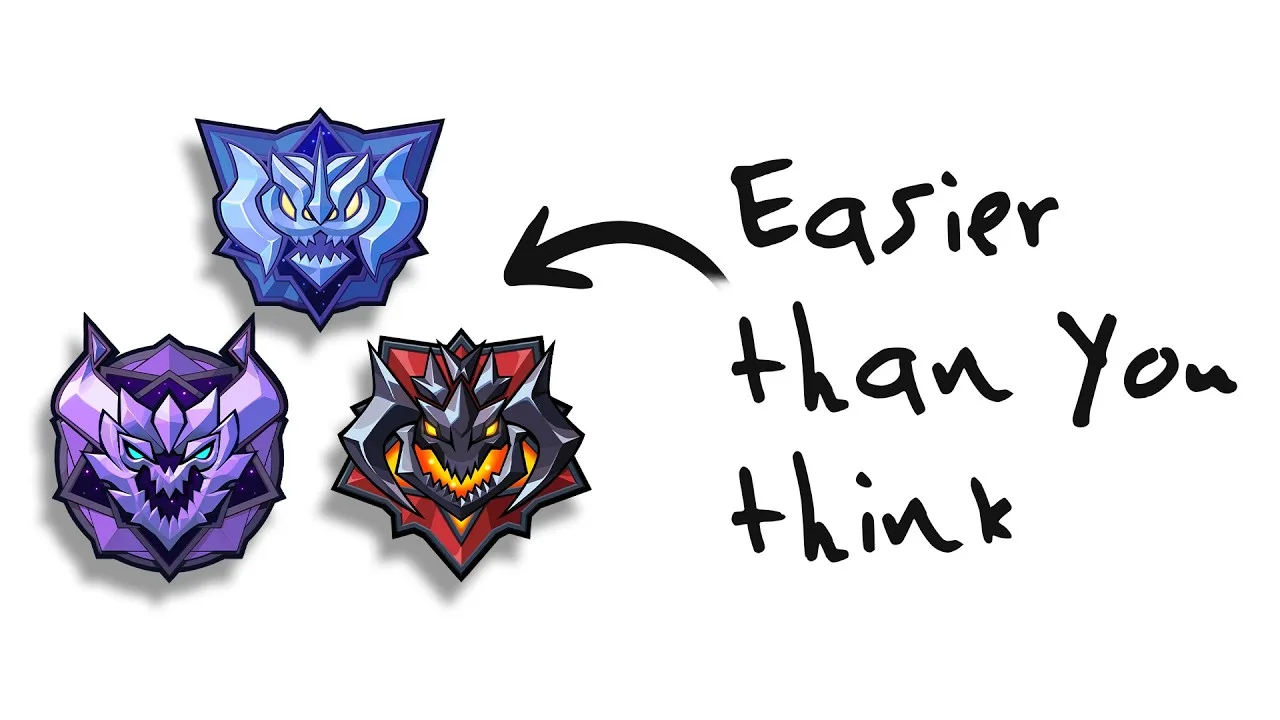
Every guide on this site so far has been about buttons. This one is not. It is about the specific game where all your buttons stop working — the one where you are a single win away from ranking up, and you somehow play worse than you have all week.
TJPuma recorded himself at Diamond 3 with 95 RP, five points from Master, and talked through what he does differently in that exact spot. He got the promotion on camera. The mindset is simple enough to fit in a sentence, and almost nobody does it.
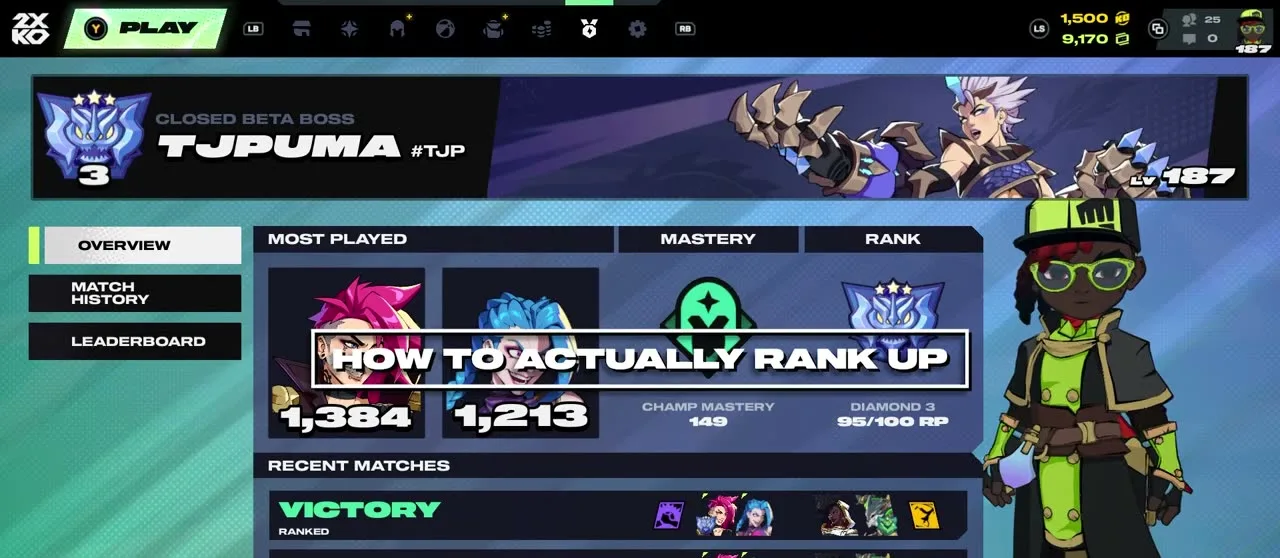
The idea: manage your expectations
His framing is that the promotion game is a different kind of game, and you should walk into it expecting a harder opponent than the ones that got you there.
“When you’re playing a Riot game and you’re one win away from ranking up, they are going to pair you or match you with the most sweatiest… player there is. And you have to play through that to prove that you’re good.”
Advertisement
The honest asterisk, which he supplies himself
Worth being straight about this, because “the matchmaker is out to get me” is one of the most common excuses in ranked and it is usually wrong. TJ hedges it twice himself. He notes the pattern does not always hold — “sometimes they don’t, it’s like very rare” — and more importantly, when he sees his actual opponent he checks his own theory out loud:
“Of course I get paired with a Master. So like I said, higher up, that’s fine. I would be Master 1 if I get promoted. So it’s actually on par.”
That is the correct read, and he says it before anyone in the comments could. A player about to enter Master being matched against a Master player is not a conspiracy — it is the matchmaker working exactly as intended, because his MMR has already climbed to where his badge is about to be.
Why the advice survives either explanation
Here is the part that makes this worth taking seriously. It does not matter whether Riot is deliberately spiking your promotion game or whether a win streak has simply pulled your hidden rating up to a harder bracket. Both stories predict the same thing: your next opponent is tougher than your last five.
So the behaviour that follows is correct regardless. The mistake is not misdiagnosing the matchmaker — the mistake is walking into a harder game with a looser mindset because you are riding a streak.
The rules for a promotion game
1. This is not the game to try something new
“Don’t use this game as, oh, let me try something new.” The thing you have been drilling all week does not go in yet. A promotion game is an exam, not a practice session, and the fact that you have been winning is exactly what tempts people to experiment.
2. Play your mains, not your project
“Play your main stuff. Don’t switch it up. Don’t play something you’ve been practicing. Play your best stuff when you’re one away.”
This is the same principle that keeps showing up across the whole channel in a different costume. In the delayed hit meta breakdown he takes the consistent combo over the optimal one for exactly this reason: “I’d rather consistent and finish your combos than maximizing and dropping it.” Same logic, applied to your character pick instead of your combo route.
3. Be warmed up before it happens
He mentions almost in passing that he is already warmed up when the game starts. That is not luck. You cannot warm up during a promotion game, and you do not get to choose when it arrives — it arrives the moment you win the game before it.
4. Treat it as the most important game of the session
“This is the one match that is more important than everything else that you just played. This is the one that will make better players rank up. This is the game that will make you stuck.”
Blunt, but it is the honest arithmetic. Ten wins that do not include the promotion game leave you exactly where you started.
The game itself: Illaoi and Vi on Freestyle
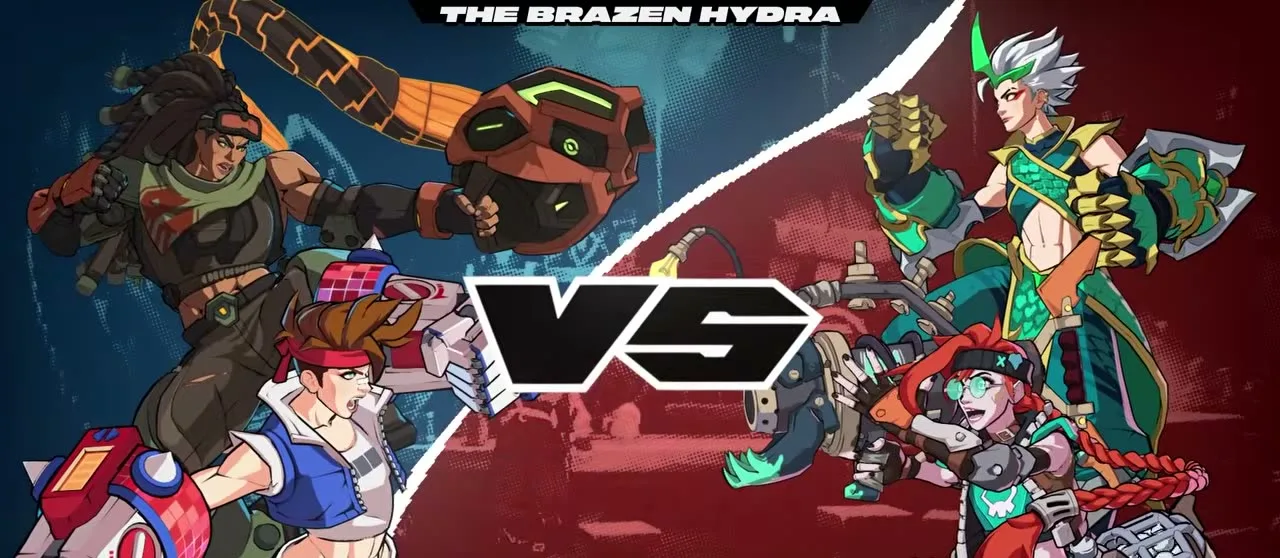
He rates the opponent immediately — “one of the best Vi shells here, a really good Illaoi shell” — and then makes his first read, which is instantly wrong. He expects the Vi to open with something on the ground. Instead: “No, she plays patient.”
Every Vi plays differently
The most transferable line in the match is this one: “I don’t know how this Vi plays. Every Vi plays differently.” He spends the first round working out whether this player is patient or aggressive, and lands on “kind of in between.”
Matchup knowledge tells you what a character can do. It does not tell you what this person will do. Under promotion-game pressure the temptation is to skip that read and play the matchup on autopilot, which is how good players lose to opponents they should beat. Our Vi guide covers her tools; it cannot tell you whether the Vi in front of you likes to press buttons.
He gets caught by the exact thing he has been teaching
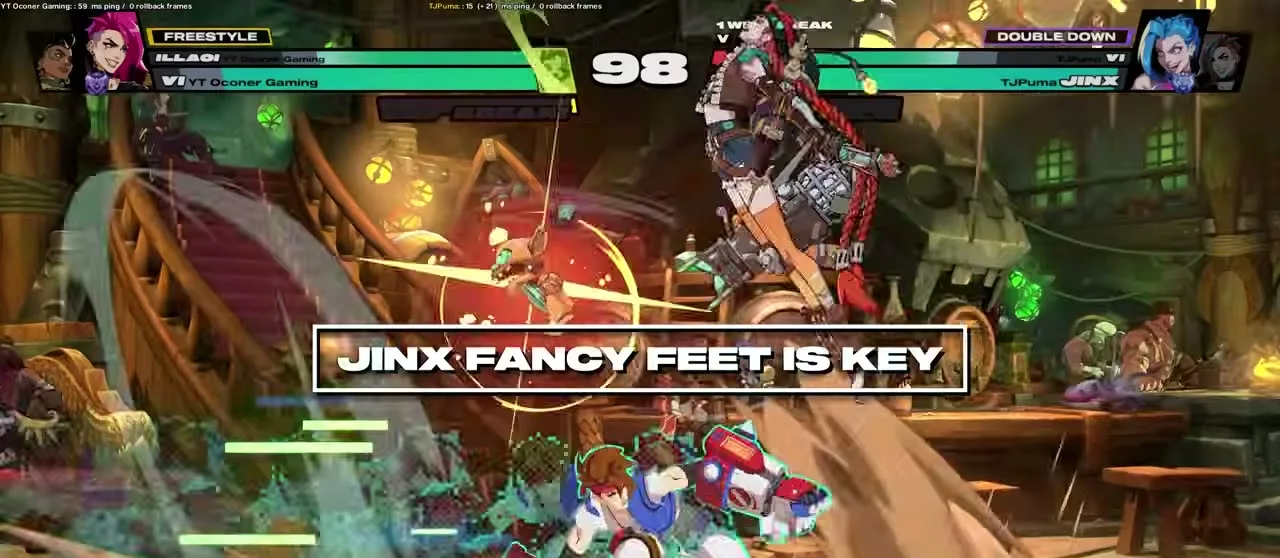
Early in round one he blocks high for a fraction of a second and eats a low. His own reaction:
“I stopped blocking low for a split second. I blocked high. And it caught me. That’s what I’m talking about. This is like the meta. It’s like delaying your hits.”
Then, a round later, he does it back — and narrates it as it happens: dash up light, delay the crouching medium, wait, and it lands. “I didn’t just do it. I waited.” His verdict on the technique is not exactly a celebration: “This tech is broken. This is what 2XKO is now, and it’s annoying.”
Seeing the same tool used against him and by him inside two rounds is a decent argument that it is genuinely the defining habit of the current meta. If you have not added it yet, it is covered properly in the delayed hit meta post and again in the Vi and Jinx replay breakdown.
Zoning is side-to-side, not one spot
One useful aside while he is holding the opponent in the corner: he describes constantly switching which side he is threatening — left, right, left, right — and says that is how you are actually supposed to zone. Sitting in one place and repeating one projectile is not zoning, it is a pattern waiting to be read.
The promotion
He takes the set. The winning sequence is not exotic — he supers while the opponent is airborne specifically because “he’s on the air, so he can’t parry.” A safe conversion chosen because it cannot be interacted with, in the game that mattered most.
The part most people would have cut
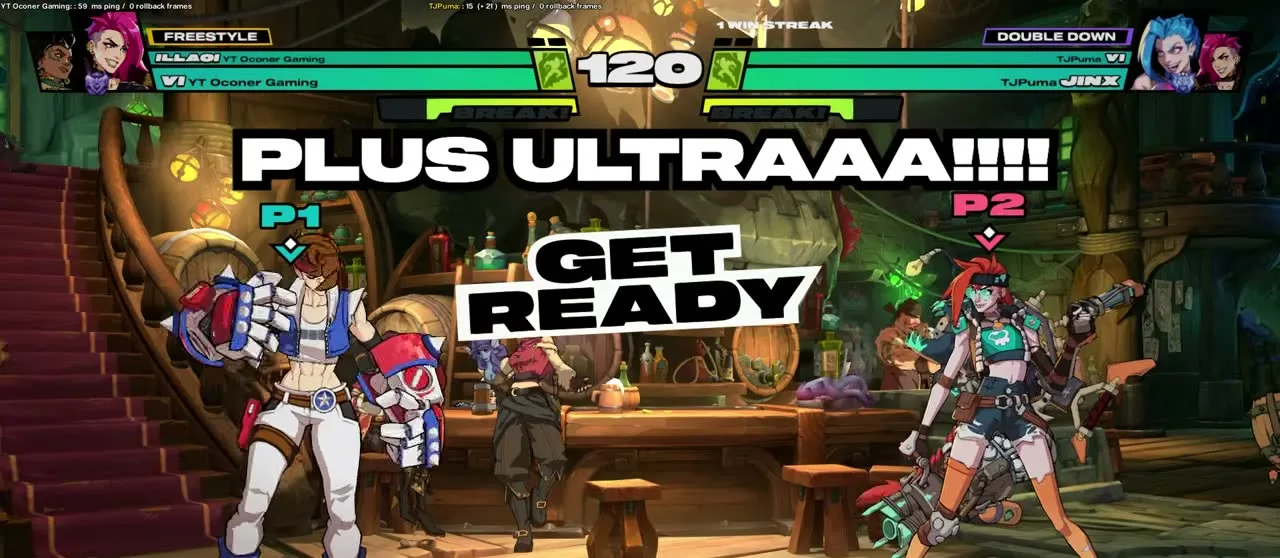
He had the promotion. The video had its ending. Instead:
“I always like to play the second match, no matter what… I always try to have the integrity and play the second match.”
Leaving after you get what you need is a small thing that costs the other player their set. Choosing not to, on camera, when nobody would have noticed, is worth more than any of the tech in this post.
He also loses parts of that second match and leaves those in too — a mistimed jump, a trap thrown by misinput (“that’s on me, that was a misinput”), and a parry he saw too late. And he is generous about it afterwards, calling it a very good game, noting the opponent clearly had a lot of tech, then looking up their channel and subscribing on the spot. From one creator to another.
Your promotion-game checklist
- Know when you are in one. Check your RP before you queue, not after the loading screen.
- Warm up before the streak gets there. The promotion game arrives without warning.
- Lock your team. No pocket picks, no character you have been learning this week.
- Lock your gameplan. Your most consistent routes only — the ones that work on everybody.
- Spend round one reading the player, not the character. Patient or aggressive?
- Expect the game to be hard, and do not treat difficulty as evidence something has gone wrong.
- Take the uninteractable conversion when you get the chance — airborne opponents cannot parry.
- Play the second match. You will lose nothing you cannot afford.
If your problem is that you are not sure what your “best stuff” even is yet, that is a different question, and what to practise at every rank is the better starting point. To turn a habit into something you can actually rely on under pressure, the training mode settings guide has the pass-or-fail drills.
The short version
- Expect your promotion game to be harder than the ones that got you there.
- Whether that is the matchmaker or just your MMR catching up, your response is identical.
- Do not experiment. Do not switch characters. Do not debut the thing you learned this week.
- Play your most consistent gameplan, not your highest-ceiling one.
- Be warmed up in advance, because you cannot choose when the game arrives.
- Read the player in front of you — every Vi plays differently.
- Delaying your hits is the defining habit of the current meta, on both offence and defence.
- Take conversions the opponent cannot interact with.
- Play the second match anyway.
One more thing
None of the above is 2XKO-specific. TJ says so in the opening line — this applies to any ranked game. But fighting games make it sharper than most, because there is no team to hide behind and no one else to blame for the loss that keeps you where you are.
If you want the mechanical side to go with the mental side, three simple Vi mechanics and the Jinx guide cover the team he used here, and ranked explained covers how RP, placements and decay actually work.
Tell us about the promotion game that is currently haunting you in the 2XKO Jungle Discord, or if you keep losing the same game at the same rank, book a coaching session and bring those replays specifically.